Learning Outcomes:
i. Define insight learning and differentiate it from other forms of learning.
ii. Explore the work of Wolfgang Kohler and his experiments on chimpanzee problem-solving.
iii. Analyze how Kohler's work provides evidence for reasoning and planning in animals.
iv. Appreciate the complex cognitive abilities of chimpanzees and their potential for insightful solutions.
Introduction:
Imagine a world where challenges are not met with brute force or memorized routines, but with a sudden flash of understanding, a mental leap that unlocks the solution. This is the realm of insight learning, where animals not only react to stimuli but actively think, plan, and overcome obstacles in creative ways. In this lesson, we'll journey into the mind of the chimpanzee, guided by the groundbreaking work of Wolfgang Kohler, and uncover the secrets of their remarkable "aha" moments.
i. Sultan and the Banana: A Problem Worth Pondering
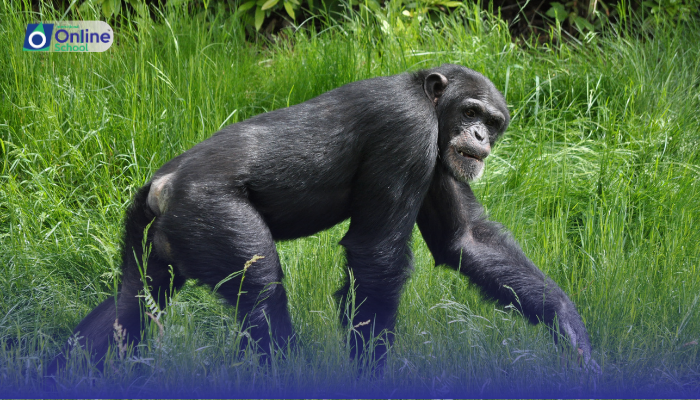
Picture Sultan, a curious chimpanzee, confined in a cage with a banana dangling just out of reach. Imagine his initial frustration as he tries to grab the fruit with his bare hands or pull it closer with sticks. But then, a moment of stillness. Sultan pauses, his eyes darting around the cage, and then, in a flash of insight, he grabs a nearby crate and uses it to bridge the gap, triumphantly reaching the banana. This was no lucky accident; it was a testament to Sultan's ability to analyze the problem, formulate a plan, and execute it with precision.
ii. Beyond Trial and Error: The Evidence for Reasoning and Planning
Kohler's experiments with Sultan and other chimpanzees revealed several key features of insight learning:
Novelty: Solutions weren't simply variations of learned behaviors; they were creative and unexpected, tailored to the specific problem.
Mental Reorganization: Chimpanzees didn't just react to the stimuli; they paused, considered different options, and rearranged their understanding of the situation before acting.
Goal-Directed Behavior: Their actions weren't random; they were aimed towards a specific goal, demonstrating an understanding of the desired outcome.
These observations challenged the prevailing view of animal behavior as solely driven by instinct or trial and error. Kohler's work provided compelling evidence for reasoning, planning, and even mental representation in chimpanzees, showcasing their cognitive abilities far beyond simple stimulus-response reactions.
iii. Implications and Beyond: A Window into Animal Intelligence
Kohler's discoveries revolutionized our understanding of animal intelligence. They showed that learning can go beyond simple conditioning and habit formation, encompassing complex cognitive processes like reasoning and insight. This understanding has implications for various fields, from animal welfare to education, urging us to respect the cognitive potential of our fellow creatures and acknowledge their remarkable ability to solve problems in their own unique ways.
Kohler's work on chimpanzees opened a window into the fascinating world of insight learning. It reminded us that animals are not simply automatons driven by instinct; they are capable of thought, planning, and even creative problem-solving. So, the next time you witness an animal overcome a challenge in an unexpected way, remember the echo of Sultan's insight, a testament to the complex cognitive abilities that lie hidden beneath the surface of the animal kingdom.
